Category: Information

National War Graves Week 16-24 May

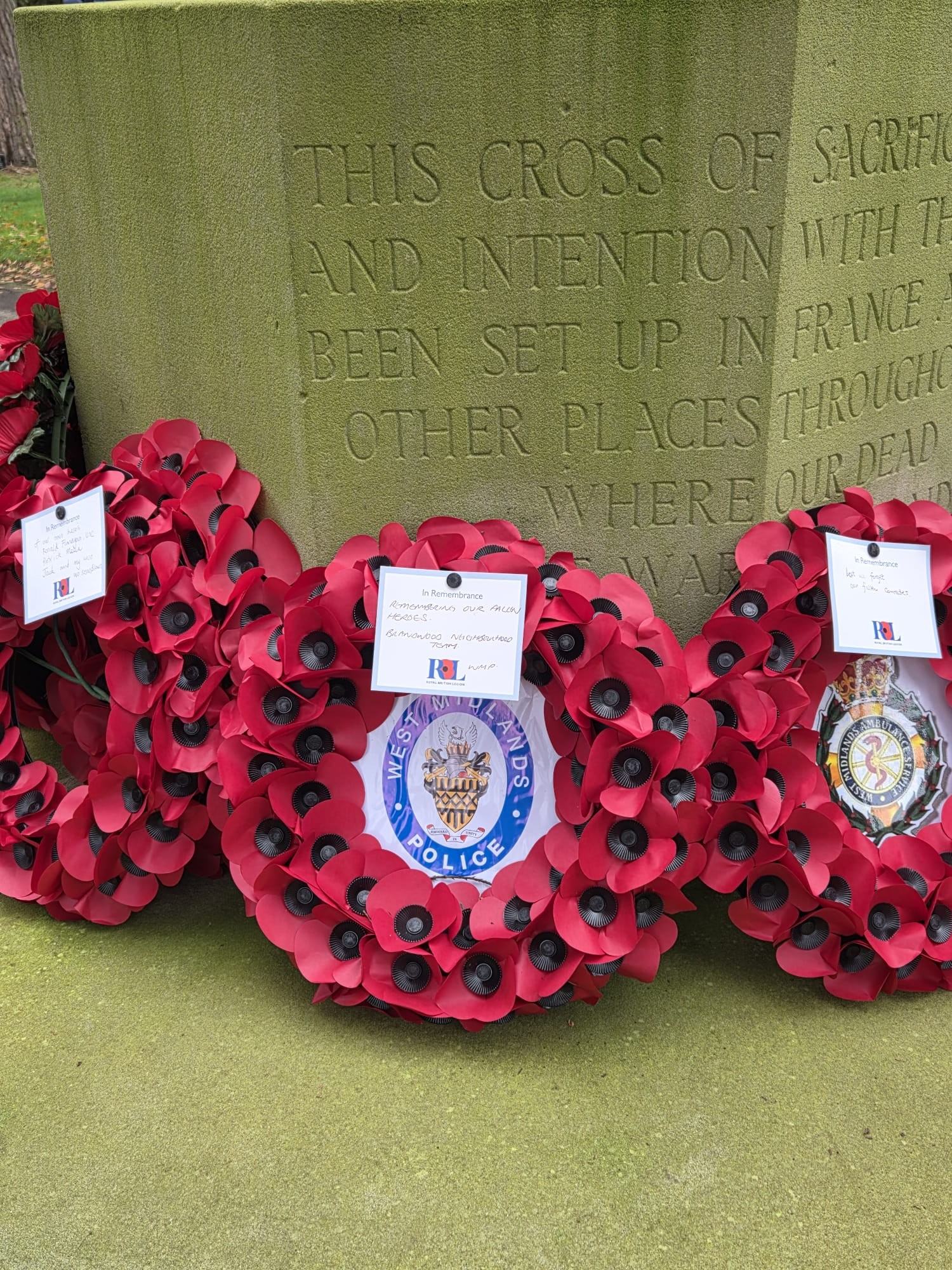
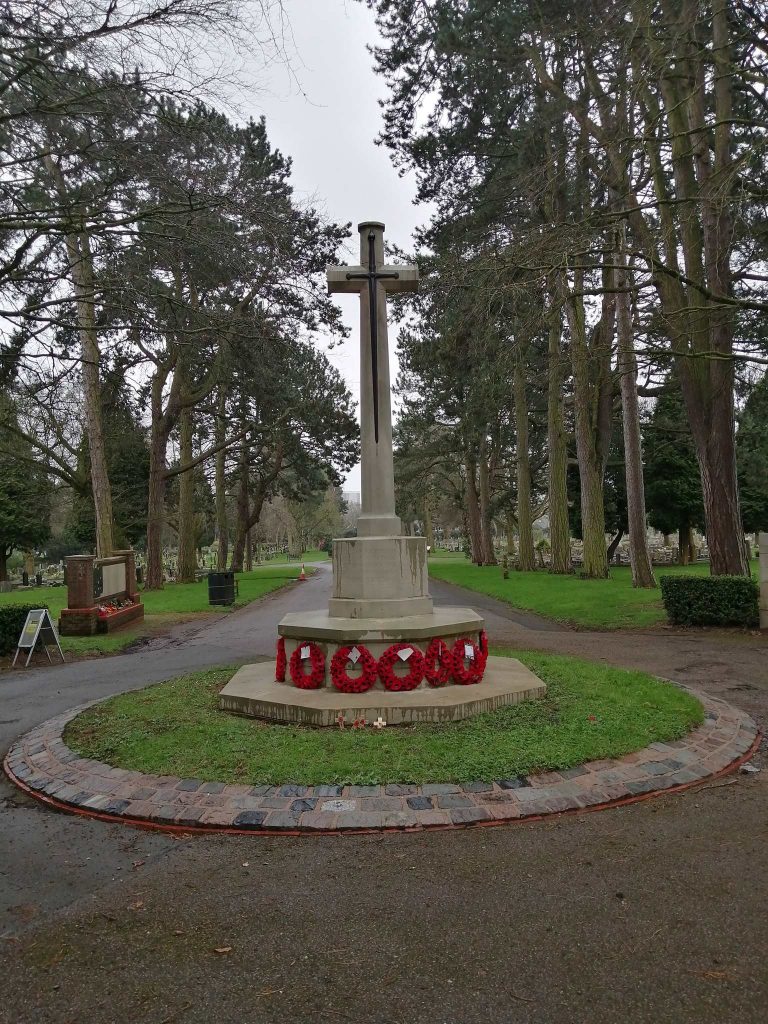
War Graves Week invites you to discover the stories behind the world wars at your local cemetery. At Brandwood End Cemetery, we have over 400 people – both civilian and armed services – who fell victim to war at home and abroad. We commemorate them every year with our annual Poppy Cross event.

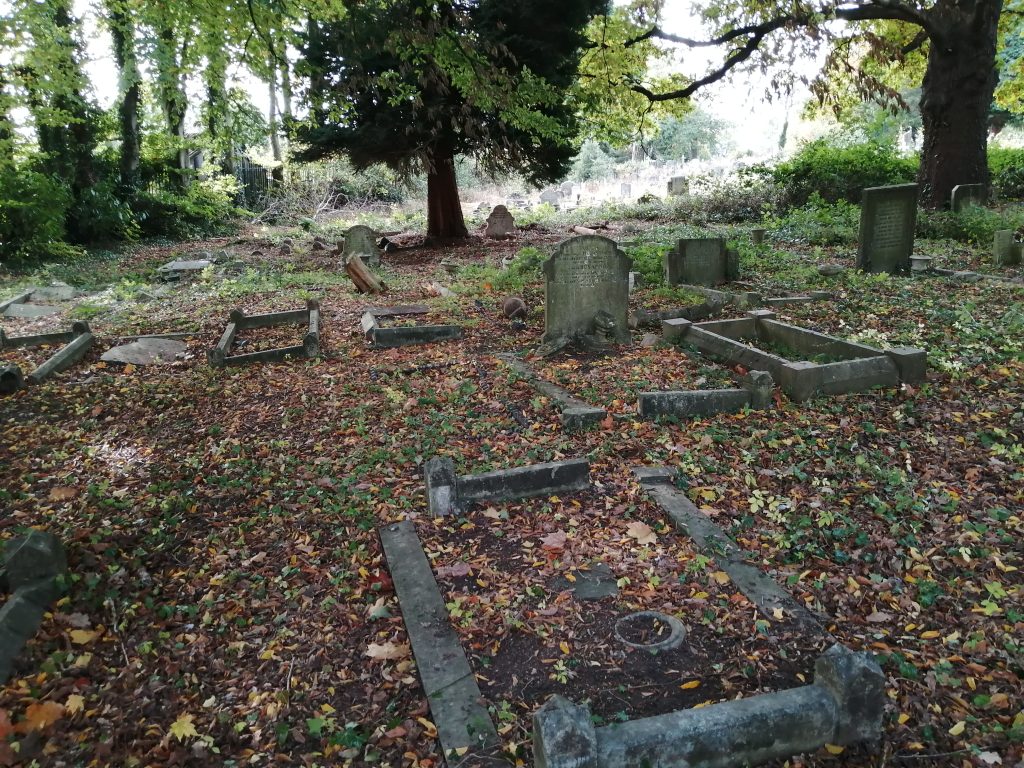
This week allows us to share some of the human stories behind the graves we care for. Thanks to our fantastic volunteers, we discovered nearly 80 graves of civilians who fell victim to the bombing of Birmingham during World War II in our 2025 Grave Recording session. These had previously not appeared on our records or had been obscured from view by shrubbery.

If you would like to volunteer, or if you have any information about the people we have identified, please get in touch! Our e mail is  friendsofbec@gmail.com

The Coombes Family

On December 11th 1940, Birmingham endured a 13 hour bombing raid which resulted in widespread destruction and the deaths of over 200 hundred civilians. Four of those are laid to rest in our cemetery. Albert William Coombes, 59 and his wife Alice, 41 lived at 14 Pine Walk, Chesterton Road, Balsall Heath. With them were their 3 youngest children – Robert, Barbara 10 and Alan aged just 5.

On the night of the raid, 15 year old Robert was working as an ARP Messenger. This was a vital, often teenage volunteer, responsible for delivering messages on foot or by bicycle when telephone lines were cut by bombing. As part of the UK’s Civil Defence services, they ensured communication between wardens at local posts and control centres, allowing for a coordinated response to enemy air raids. Their work in reporting bombing locations allowed for rapid dispatch of rescue parties, ambulances, and first aid teams to affected areas.
By the time his shift was ended, Robert returned to find his parents and siblings had all been killed while taking shelter at 3/114 Brunswick Road. With an older brother serving abroad (later taken prisoner by the Japanese), Robert had only his two married sisters left.

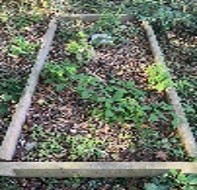
Their story was uncovered when our volunteer gardeners cleared years of shrubbery to reveal their grave.


The Scrivener Family

The Scrivener family were no strangers to loss and the terrible price of war. Their father Samuel had died on active service in 1918 aged 49 and never returned home, being interred in France. He served with 1st Btn Suffolk 2nd Service Co and died on 21 Aug 1918. He is commemorated at Mazargues war cemetery, Marseilles.

Five children lived with their widowed mother at 104 Grace Road, Sparkbrook. Albert, the eldest,  was married with 2 children but continued to live at home with his mother and his 4 siblings – 10 people in a 5 room house. Emily, his mother, and his younger brother James were described as ‘incapacitated’ in the 1939 census and it is likely that Albert was the family breadwinner for both himself and his mother following his father’s death.

On Tuesday evening, the 19th November 1940, the air raid sirens sounded and Birmingham endured another night of bombing – 18 Parachute mines (4 unexploded), 677 High Explosive, including about 42 Delayed Action type, 243 Incendiary Bomb incidents have been reported. 17 of the incendiary bombs were of the oil type. The first report of a bomb being dropped was at 7.25 p.m. Extensive damage to property was caused by exploding parachute mines, High Explosive bombs and fires.

James Henry aged 33 and his older brother Albert George, 49 (ironically exactly the same age as his father was when he died in France) were both killed at home during the raid. It is likely the rest of the family had been out of the house in a shelter.

Spare a thought for Emily who had lost both her husband and two sons to the world wars of the twentieth century.

Evans /Rea Family

Also discovered by our Grave Recorders is the final resting place of the Evans and Rea families who were buried under brambles in B16 for many decades.

Harry was a member of the Home Guard. Originally from Long Street, Balsall Heath, Harry had served with Army Service Corps (Mechanical Transport) in the First World War joining up in 1917 and married Annie Sorrill in 1925

Annie and Harry Evans, aged 39 and 42, their 11 year old daughter Patricia Ann died alongside 53 year old Norman Rea and his wife May on 3rd December 1940 at 12 Vimy Road, Billesley. That night the air raid hit the police station at Billesley and the AA Gun-sight at Swanshurst Park.

May was Annie’s sister and she and Norman lived at 334 Green Lane, Small Heath. Sadly her decision to stop with her sister and niece cost her and her husband their lives.

This remains an unmarked grave.
 

Air raid November 11th 1940

Today, 19th November 1940 was an awful day for many civilians in Birmingham as there was a devastating WW2 bombing raid.
During a recent project, to discover those often in unmarked graves, the Friends have added close to 50 names and grave sites to their Poppy Placing project. Many of them were whole families lost in the raid. Lest we Forget.
The Friends are lucky enough to be able to call upon Matt Felkin who holds many of the records for Birmingham Air Raids Remembrance Association.  He has posted this additional information.
Code for Birmingham ….Regenschirm (Umbrella)
Tuesday November 19th 20th 1940
Weather -clear sky with some fog at first, rain spreading in from the east
Minor activity during the day
Birmingham was attacked by Luftflotte 2 and 3, two primary divisions of the Luftwaffe
439 long range bomber’s dispatched
Luftflotte 2 -142 aircraft to Birmingham,107 reached the target area .
Luftflotte 3- 297 to Birmingham,249 reached the target area
Bombs dropped –
6x SD1800
9x SD1400
17x SC1000
32x LMB (para mine) small
16x LMA (para mine) large
816 x BSK (Bomben SchaltKasten) incendiary container. theoretically, a He 111 could carry 1,152 of them. In practice, it would carry a mixed load:-
105x SC500
22x Flam 500 (oil bomb) The original large incendiary device, the so called Oil Bomb which was known to the Germans as the flam or flammenbombe.
22x LZZ (long delay fuse bomb)
292x SC250
45x flam 250
2139 x SC50
Areas Affected
West Midlands Police Records Raid 43 -19th /20th November 1940 Air Raid Warning Red was received at 6.50 p.m. on Tuesday 19th November and White at 4.29 a.m. on Wednesday 20th November. During this period an intense raid was made on all districts of the City. (C District – Gerrard Street, George Street Garage, ICI Witton;, D-Division – Nechells Gas Company, GEC, Hughes, BBC, Queen Street, Aston Hall Road; E-Division – Coventry Road, Stratford Road)
The areas least affected were Kingstanding, Harborne, Northfield, Kings Norton, Stechford, Kings Heath. 18 Parachute mines (4 unexploded), 677 High Explosive, including about 42 Delayed Action type, 243 Incendiary Bomb incidents have been reported.17 of the incendiary bombs were of the oil type. The first report of a bomb being dropped was at 7.25.

Busy behind the scenes.

Good morning all. You may think the Friends have been quiet in August as its our ‘event free’ month but behind the scenes our volunteers have been busy.
We are moving ahead at speed with our Grave Recording project and our Grave Gardeners are continually uncovering War Graves. Preparations for our Poppy Placing project have started and Remembrance weekend is on our mind…..wreath layers, celebrant, bugle player. It’s all go behind the scenes. As usual our researchers are finding out more about the lives of those buried in the cemetery and kind supporters are passing information and photographs to us.
Next events are the 3 walks we are holding as part of Heritage Open Week in September. We are pleased to say they are all full and well supported. Maybe we need to do more walks?
Thank you all for your continued support.

Cemetery Gates Closed.

In line with the high winds Saturday the cemetery gates were closed for safety reasons.

Unfortunately there were a few branches and at least one tree that have been affected again by the high winds.  Luckily for us the Tree Surgeons were quick to act and have spent yet another few days in Brandwood End checking and making trees as safe as they can in these unusual conditions. Saturated ground  and high winds can cause havoc.

Stay safe.

Unmarked Grave

Back in November we featured John Charles Shaw, Buried in an unmarked grave in Brandwood End.. We were heartened by the interest this short article  sparked. Little did we know that it was a gift that would keep giving.  The resulting detail is the next phase but we have an idea it wont stop there……..      
                John Charles Shaw – Penistone footballing pioneer – NUMBER THREE
OK, what to say about John Charles Shaw? Let’s just start with a few of his contributions to our beautiful game:
· Founder of the worlds 2nd oldest association football club, Hallam FC
· First captain of the world’s oldest football club, Sheffield FC
· First ever player to lift a football trophy as captain of the winning team. Youdan Cup 1867
· Captain of Hallam FC for the world’s first ever club football match, Hallam FC vs Sheffield FC, 1860
· Established the world’s first ever county FA, Sheffield FA, 1867
· Played in the first ever intercity match, Sheffield vs Nottinghamshire 1865
· Played in the first ever inter association match, Bramall Lane, 1871
· Probably most importantly, President of Sheffield FA when the rules of football were finally unified in 1877.
Shaw was born in Penistone in 1830, the son of a bootmaker. Again, like our other 2 Penistone footballing pioneers (John Ness Dransfield & John Marsh), he was inspired to play football, baptised & educated by the Reverend Samuel Sunderland. Baptised at St John’s Church in Penistone & educated at Penistone Grammer School.
John worked as a clerk at Dransfield’s solicitors in Penistone before moving to Sheffield in the early 1850’s. He married Mary Ann Garnett in 1853, and the couple moved into premises at 19 Norfolk Row. (now Imperial Chambers). John operated a Legal Stationers business from the same address. It was during this period that Shaw developed relationships with like-minded footballing enthusiasts and able to take his Penistone footballing influences to Sheffield FC as their first official captain in 1859 (possibly earlier).
Shaw retained his membership of the Sheffield Club despite forming the world’s second oldest club Hallam in late 1860.
Shaw’s involvement with the development of the game in Sheffield and beyond is hugely impressive.
The Sheffield and Hallam clubs were involved in the first inter-club match in December 1860 with Creswick and Shaw the opposing captains.
John Charles Shaw was a member of the Sheffield team that played against a London representative side at Battersea Park in 1866.
The Hallam club, with John Charles Shaw as captain, were victorious in winning the world’s first adult knock-out football competition, the Youdan Trophy in 1867.
John Charles Shaw was a member of the Youdan organising committee which led to the establishing of the Sheffield Football Association in 1867. In 1868 he was Vice-President and in 1869 he became President of the Association. A position he retained for 14 years.
Shaw was voted to be 12th man in the first inter-association game held at Bramall Lane in 1871 between London and Sheffield. Charles William Alcock had selected a team to represent London but were a man short. John Charles Shaw played in goal for the visiting side.
In 1876, the Sheffield Association Challenge Cup was initiated. John Charles Shaw captained the Thursday Wanderers aged 46, in the first round of the cup, losing 5-4 to the Heeley club.
In 1877, with John Charles Shaw as President, the Sheffield Association, reached an agreement with the London Association regarding the rules of the game. This established a universal code for the playing of association football throughout England.
John Charles Shaw eventually moved to Birmingham due to work commitments, where he remained until his death in 1918.
The two decades between 1857 to 1877 are the most crucial in the making of the modern game of association football, prior to the onset of professionalism and leagues. John Charles Shaw straddled these two decades being at the forefront of this making and was a continuous presence helping to influence and shape the evolvement of the game. The world of football and Sheffield in particular, owe him a huge debt of gratitude.
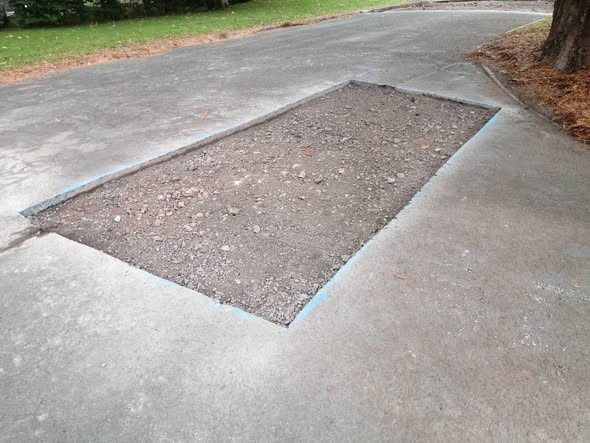
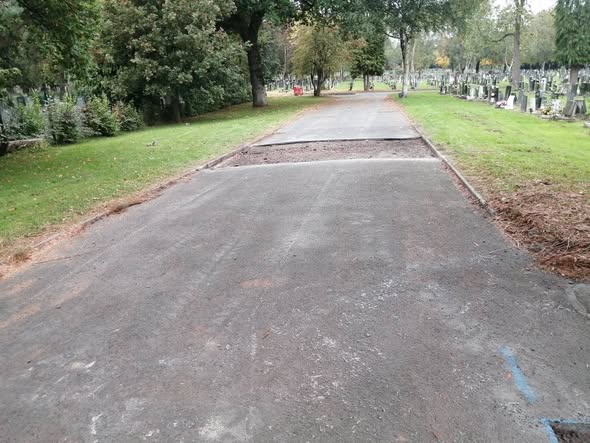
John Charles Shaw’s grave at Brandwood End Cemetery, Kings Heath, Birmingham. It is the sad empty bit between the other two graves in the photo below.
Thanks to Kevin Neill for source information and photos.

Last Grave Gardeners Session of 2024

SATURDAY 14TH DECEMBER. MEET OPPPOSITE THE LODGE AT 11AM.
As you can imagine we will have to confirm this literally on Friday (So watch this feed in case we have to cancel) as things in the Cemetery are not as they usually are BUT there are many areas of the cemetery unaffected by the current fallen tree issues so we should be OK to go ahead.
We welcome anyone who fancies some outdoor exercise whilst helping to clear graves. Feel free to bring your own gloves and tools such as secateurs and loppers but please make sure you have stout footwear.
WE WILL NOT BE WORKING NEAR ANY OF THE FELLED TREES. THESE WILL BE LEFT TO THE PROFESSIONALS !
dav

Trees down in recent storm.

Many of you will already know that there were many trees brought down in the recent storm.  The cemetery didn’t escape unscathed and we think this is the worst time the trees have had- at least in the last 20 years.

We fear we have lost at least 10 very large trees, several large bows and many more smaller trees and shrubs. Some of the trees were deciduous and without leaves so it was fairly easy to see if there was any headstone damage. We are pleased to say that miraculously very few graves have been seriously affected but it is less easy to say what has happened under the large Conifers.

Until the trees have been removed, and that will take some time, you will not be able to get any reassurance as to the condition of memorial beneath them. As you can appreciate there are many trees down in many locations and the cemetery was shut on Sunday and early this morning to allow the inspection of the damage. We believe opening hours are now as normal but this may change as and when Tree Surgeons are operating in various areas.

It is noticeable that the main cause of the felled trees seems to be very turbulent wind in confined areas of the cemetery during the storm and the waterlogged soil after a huge amount of rain. The trees themselves generally appeared healthy. So sad as most of them were mature and part of the Grade 2 avenue plan.